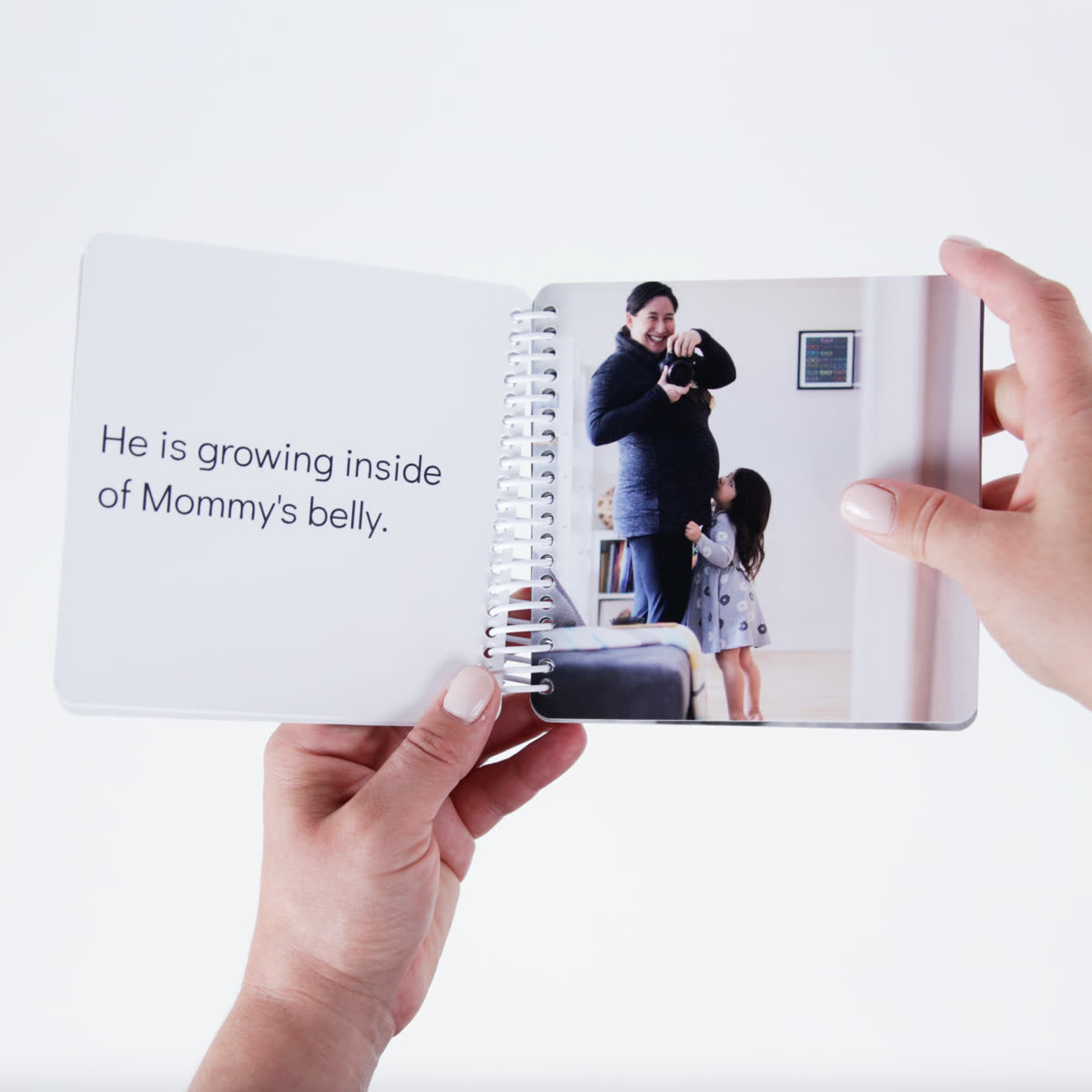
Emotions Book for Toddlers: How to Make a Feelings Book With Your Own Photos
Why an emotions book for toddlers works better with faces your child knows, which feelings to start with, and how to fill each page with your own family photos.
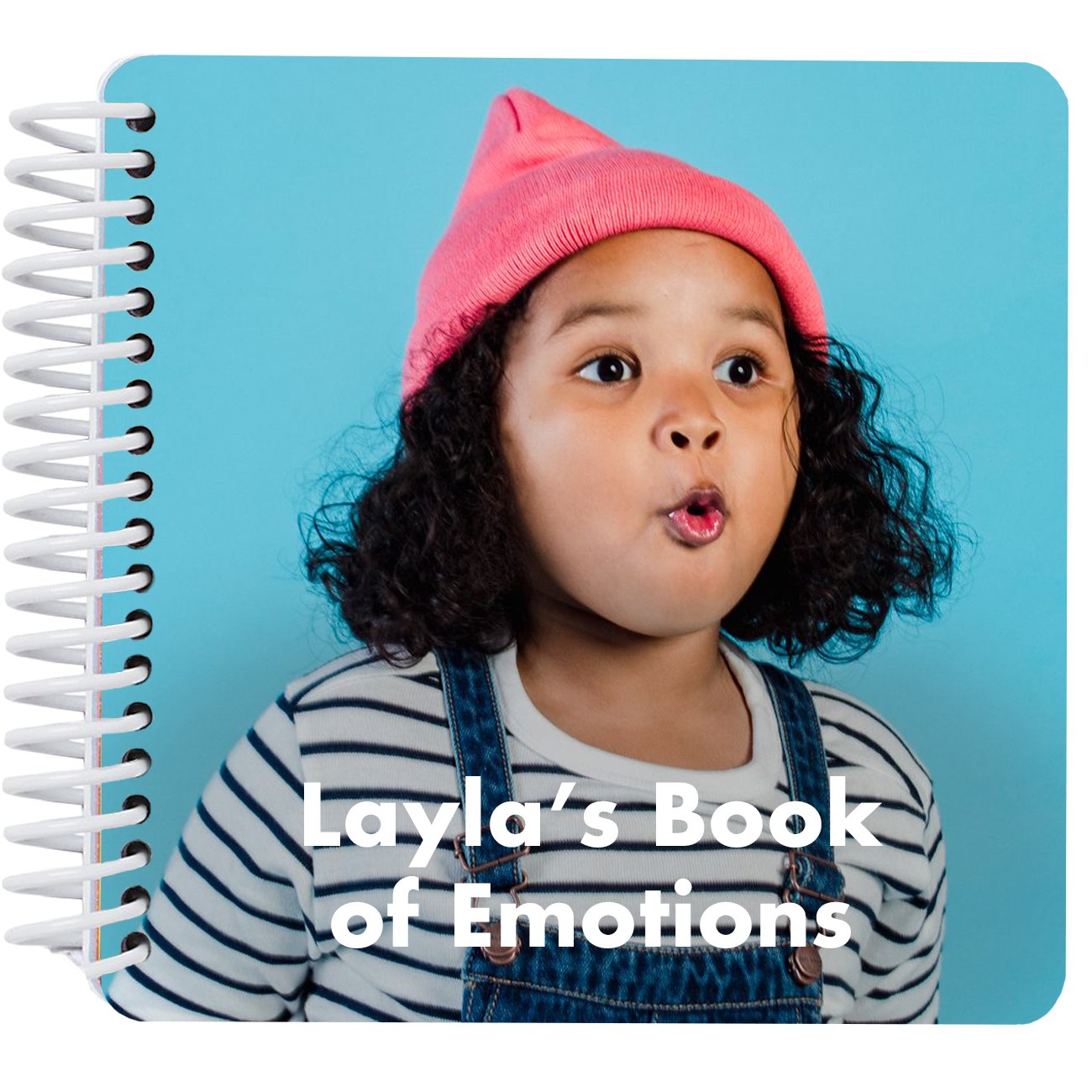
An emotions book for toddlers pairs simple feeling words with pictures of faces, so a little one without the words to explain a meltdown has something to point at. Many parents find a version built from their child’s own expressions and the faces of people they see every day a natural choice, since those are faces a little one already knows well.
Quick answer: The simplest way to get an emotions book for toddlers that feels personal is the Emotions Board Book from Kids Board Books. You upload photos of your child and family showing real expressions, then label each one with a feeling word such as happy, sad, silly or surprised. Start with four or five clear feelings, read it when your toddler is calm, and point back to it later when a big moment comes.
Why do toddlers need a book about feelings?
Toddlers feel frustration, joy and fear at full volume long before they have words for any of it. A book gives those feelings names and a picture to match. The American Academy of Pediatrics notes that reading books together about common feelings can help children recognize their own emotions and begin to understand how other people feel.
The same AAP page points out that talking about feelings while a child is calm prepares them for the moments when they are stressed or overwhelmed. That is the real job of a feelings book: practice on a quiet afternoon, so the word "mad" already means something when the block tower falls.
Is a photo emotions book better than a regular one?
For many toddlers, yes, because the faces are ones they already study all day. Two of the board books on the AAP’s own list for infants use photos of real babies and toddlers and invite little ones to copy the expressions. A personalized book goes further still. Instead of a stranger’s frown, your child sees their own pout from last Tuesday, or Grandpa pretending to be grumpy.
Seeing a parent or sibling look sad on the page also sends a quiet message that everyone has feelings, including the grown-ups. A store-bought feelings book can’t show that with your family.
Which emotions should a toddler book include?
Begin with feelings that are easy to see on a face and come up often in a toddler’s day. You can add subtler ones as your child grows.
- Happy: a real laugh, not a posed camera smile.
- Sad: a lip wobble or teary face, captured gently.
- Mad: crossed arms or a stomp, the expression your toddler knows best.
- Scared or worried: wide eyes at a loud noise or a big dog.
- Surprised: an open mouth when a gift or a bubble appears.
- Silly or goofy: a tongue out or a crossed eye, usually the page they ask for first.
- Sleepy, proud or shy: good additions once the first set feels familiar.
Two photos per feeling helps a lot. Pair your child’s face with a family member showing the same emotion, and the page teaches that "sad" looks a little different on Mommy than on me, but it is the same feeling.
How do you get photos of real expressions?
Look through the pictures already on your phone first. A camera roll often holds genuine reactions you never thought of as useful: a birthday cake moment, a frustrated bath time, a sleepy car seat nap. Candid shots often show the expression more plainly than posed ones, so they are worth trying first.
For anything missing, turn it into a game. Ask your child to "make a mad face" or "show me surprised" and snap the result, then have a sibling or grandparent do the same. Plain backgrounds and close crops keep the face front and center on a small page.
How is the Emotions Board Book put together?
The Emotions Board Book from Kids Board Books is a 5.25 x 5.25 inch photo board book. Pages can carry a caption or skip it; you set the feeling word in large type, and change the text size, text color and page colors so each emotion can have its own look, for example a sunny yellow page for happy.
With a minimum of 20 pages and room to grow to 56, it holds anywhere from 13 to 31 photos without dropping a favorite expression. Those sturdy, rigid boards are joined by a spiral binding that turns easily for small hands, and the glossy surface wipes clean after snack time. Printing and binding happen in the USA.
How do you read an emotions book with a toddler?
Keep it short and interactive. Name the feeling, point to the face, and ask your child to copy it. Then connect it to their life: "Remember when the balloon popped? You looked surprised, just like this."
When a hard moment does come, the book becomes a tool rather than a story. Bring it out once your toddler starts to settle and let them find the face that matches how they felt. Pointing is a perfectly good answer for a child with only a handful of words, and it builds the same naming habit described in our post on teaching first words with photo books.
When is a feelings book especially helpful?
Any time is fine, but some transitions bring a wave of new emotions: starting daycare or preschool, a move, a new baby, or a parent traveling for work. If a sibling is on the way, our guide to a personalized big sister or big brother book pairs well with a feelings book, since jealousy and pride tend to show up together.
It also makes a thoughtful second or third birthday present from grandparents or a godparent, as long as the parents can share a few photos. Families who want more learning titles can browse the ABC and learning collection, which also includes the personalized ABC books.
Next steps
Pick out five feelings and find two photos for each, then open the Emotions Board Book and select Start Customizing to design it on Pinhole Press. If your toddler is still mostly learning who is who, the Custom Board Book of Names & Faces is a gentler first step, and our page of books for toddlers compares the other options. Production runs 5 to 7 business days once you order, and US Economy shipping adds 4 to 8 business days after that.
Frequently asked questions
What age is an emotions book best for?
Kids Board Books recommends its Emotions Board Book for children age 1 and up. Young toddlers enjoy pointing at faces and copying expressions, while two and three year olds start matching the words to their own experiences, so the same book stays useful for several years.
Can I use photos of the whole family, not just my child?
Yes, and it often works better that way. Mixing your toddler's expressions with pictures of Mom, Dad, a sibling, a grandparent or even a cousin shows that grown ups and kids share the same feelings. Just pick pictures where the expression is easy to read at a glance.
Should I include negative feelings like angry or sad?
Include them. Those are the feelings toddlers most need words for, and seeing them on a friendly page signals that they are normal and okay to talk about. Choose gentle photos, like a pout rather than a full tantrum, so the page feels safe to revisit.
How much time should I set aside to design it?
Once you have chosen your photos, the design tool on Pinhole Press usually takes about 10 to 15 minutes to fill. You drag photos into place, type a feeling word on each page and reorder pages until the sequence feels right before you check out.
Kids Board Books is the personalized photo board book catalog from Pinhole Press, made with the littlest hands in mind. Every photo tells a story — this is how we help tell it.
More about Kids Board Books